
Granite vs Marble: Which Stone Is Better for Your Home
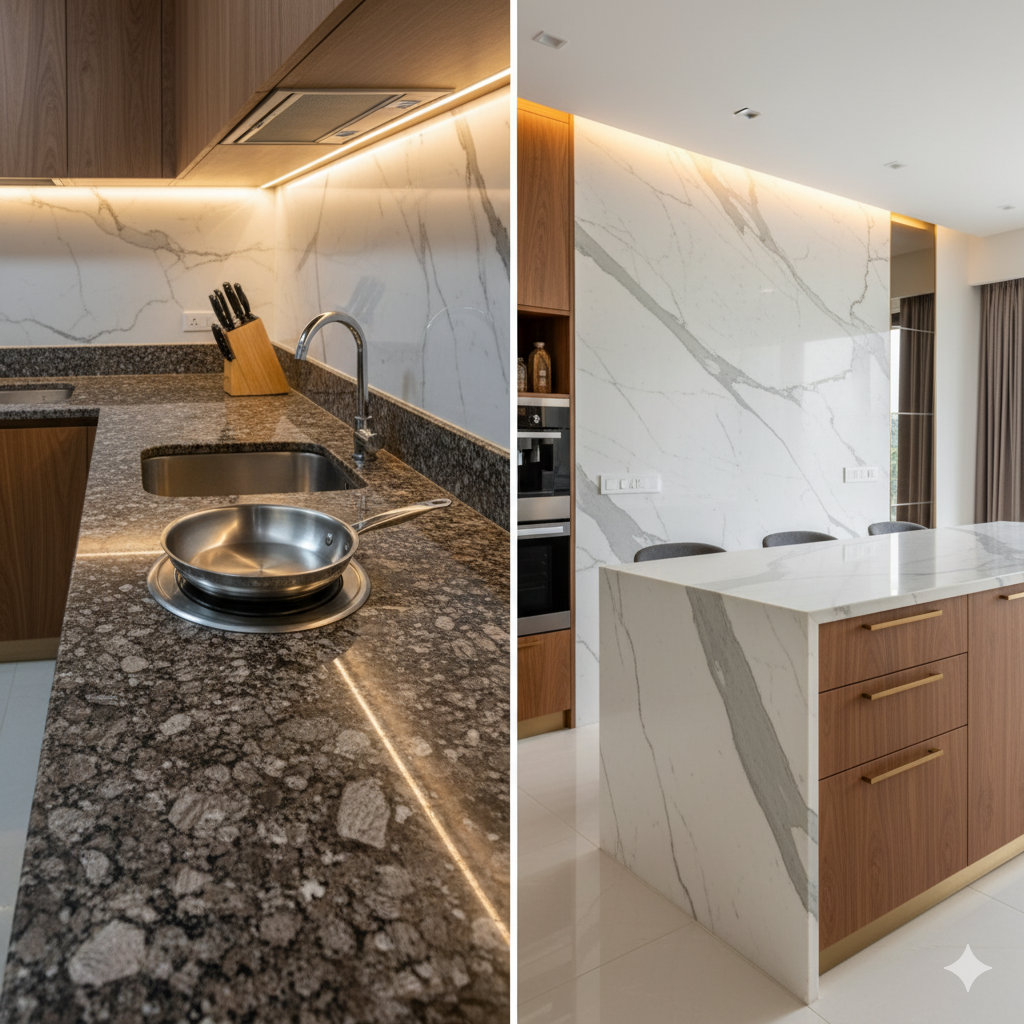
Granite vs Marble: Which Stone Is Better for Your Home
Introduction
When you are building or renovating, the choice between granite and marble shapes both the look and the daily experience of your home. At first glance they can seem similar. Both are natural stones, both can be cut into large slabs, and both lift a space from ordinary to premium. In real Indian homes, however, the differences are significant. Granite is formed from molten rock and usually contains quartz and feldspar, which gives it higher resistance to scratches and heat. Marble is a metamorphic stone rich in calcite that reads softer to the eye with graceful veins and a glow that printed surfaces cannot copy. Lifestyles matter as much as looks. A busy, high heat kitchen with frequent tadka sessions demands a surface that can shrug off splashes and sudden temperature changes. A living room or bath where you want a spa like feel rewards a stone that reflects light gently and feels luxurious to the touch. Budget and maintenance influence the decision too. Granite often wins on low fuss durability and stable pricing across large areas. Marble commands a premium where you want that magazine style moment and are willing to care for it with sealing and mindful cleaning.
This guide compares granite and marble in plain language so you can choose with confidence. You will understand appearance and pattern behavior, hardness and porosity in daily use, finish choices that change both look and upkeep, thickness and edge decisions that affect comfort, and where each stone performs best room by room. You will also see smart mixing ideas so your home gets the wow where it matters and the practicality where you need it most.
Index
- Appearance and mood
- Durability scratch heat and stain behavior
- Finishes and how they affect daily upkeep
- Thickness edges and what feels good in use
- Room by room recommendations
- Costs budgeting and lifetime value
- Smart mixes that balance beauty and practicality
- FAQs
- Conclusion
Appearance and mood
Marble reads like a painting. A white or cream base carries flowing grey or gold veins. The pattern feels calm, luminous, and classic. In living rooms, foyers, and master bathrooms it creates a gallery-like presence. Granite looks more granular and crystalline with specks and swirls. Modern granites also come with long directional movement that suits contemporary kitchens and outdoor counters. If your palette leans warm with wood and brass, both stones work. If you want a bright cloud like wall or a serene spa feel, marble is unmatched. If you want visual strength and a slightly rugged character, granite delivers it effortlessly.
Durability scratch heat and stain behavior
Granite is generally harder and more scratch resistant. Hot pans placed briefly on a granite counter are usually not a problem, though trivets are still wise for finishes and sealers. Many granites are less porous than marble, which means staining is less of a worry and daily cleaning feels straightforward.
Marble is softer on paper yet perfectly strong for homes when used and maintained with intent. The polished face of marble can etch from acids and absorb oils if spills sit. In kitchens this calls for honed or leathered finishes, sealing on installation, and quick wipe ups. On walls and selected floors, marble’s durability is more than adequate and its beauty is the reason it is used in museums and historic buildings across centuries.
Finishes and how they affect daily upkeep
Polishing creates mirror depth. On marble it looks luxurious on walls and select floor panels. On granite it enhances color and grain and is popular for kitchen worktops.
Honed gives a satin matte glow. It is friendly for floors and hardworking counters because it improves grip and hides micro wear. Honed marble is the first recommendation for Indian kitchens and family areas.
Leathered, also called brushed adds a fine texture that masks fingerprints and tiny scratches. It feels premium on islands and vanities for both stones.
Choose the finish by function first. Busy floors and counters prefer honed or leathered. Feature walls and formal zones can enjoy polished or soft polish.
Thickness edges and what feels good in use
Floors and wall cladding commonly use thickness in the range of eighteen to twenty millimetres for both stones. Kitchen and vanity counters usually move to twenty to thirty millimetres depending on span and design. Thicker profiles feel substantial and allow deeper edge details.
Edges influence both looks and comfort. Eased gives a crisp modern line. Pencil round softens the touch for family kitchens. Full bullnose suits classic interiors and heavy use counters. Decide early because thickness and edge choices affect fabrication, support, and the final visual balance.
Room by room recommendations
Living room and foyer
When you want a signature statement, marble wins with its luminous veins. Use it on a television wall, a foyer backdrop, or selected floor panels. If the room is very busy and you want a calmer floor that hides dust, consider honed granite or warm beiges in marble for the main field and keep the drama on the wall.
Kitchen
For the main worktop, granite is a reliable performer because it manages heat, knives, and turmeric better. If you love marble, keep it on the island or backsplash in a honed or leathered finish, seal it well, and adopt a quick wipe habit. This mix gives visual luxury with low stress.
Bathrooms
Polished marble on walls and honed marble or honed granite on floors create the spa mood with safe footing. If the bathroom has low light, marble walls brighten the space. In a dark powder room, a deep granite with warm lighting looks rich and intimate.
Bedrooms
Use marble for window seats, dresser tops, or a quiet ledge where touch and light matter. Use granite where you need function and zero anxiety such as study tops or balcony counters.
Pooja room
White marble platforms and back panels feel pure and reflect warm diya light beautifully. If you want a glowing feature, add backlit onyx as the backdrop and keep the platform in white marble for easy cleaning. Granite is suitable for storage counters in the same area if you want a tougher work surface.
Outdoors and utility
Granite handles weather and rough use better, especially in brushed or flamed like textures where available. For semi outdoor bars or service areas, granite is the practical pick.
Costs budgeting and lifetime value
Granite usually offers stable pricing and availability across large areas, which helps when you are covering full home floors or long counters on a budget. Marble pricing varies widely by quarry, grade, color uniformity, and slab size. Premium whites and artistic veins command higher rates. Lifetime value is more than the initial invoice. Granite’s low maintenance nature reduces ongoing effort. Marble’s ability to be re polished after years can restore it to like new, which stretches the investment across a long life. The smartest spend is to place each stone where it gives maximum return in either visual impact or daily convenience.
Smart mixes that balance beauty and practicality
Use marble where you look the most and granite where you work the most. A honed marble island next to a polished granite prep counter is the classic pairing. In living rooms, keep a marble feature wall and choose a calm honed granite or warm beige marble on the floor. In bathrooms, use polished marble on the shower walls and honed granite on the vanity or shower threshold for durability. This approach keeps the home visually consistent while aligning material strengths with real use.
FAQs
- Which stone is tougher for kitchen use?
Granite is generally tougher for the main prep counter thanks to better scratch and heat resistance. If you prefer the look of marble, keep it on the island or backsplash in a honed or leathered finish and seal well. - Does marble always stain and etch
Marble can etch from acids and absorb oils if spills sit. In practice, a honed or leathered finish, sealing on installation, and quick wipe ups make it easy to live with, especially outside the heavy work zone. - Which one is better for full home flooring?
For calm, uniform floors that hide dust, many Indian homes prefer honed granite in warm tones or beige marbles like Botticino and Crema Marfil. If you want a bright minimal shell, honed Carrara works beautifully. - Can I mix granite and marble in the same room?
Yes. Keep undertones compatible. Use marble for the visual highlight and granite for the working surface. The mix looks intentional when finishes are coordinated. - How often should I seal granite and marble?
Seal both on installation. Granite may need resealing less frequently depending on the type. Marble benefits from a six to twelve month check based on use. Use pH neutral cleaners for daily care. - Which finishes are safest for floors?
Honed is the most comfortable for floors because it softens glare and improves grip. Save high polish for walls and small feature areas.
Conclusion
Granite and marble are not competitors so much as complementary tools. Granite brings everyday strength with understated character. It shines on hardworking counters, utility zones, outdoor ledges, and anywhere you want durability with minimal fuss. Marble brings emotional value with light, movement, and a timeless mood. It shines on feature walls, spa like bathrooms, serene window seats, and statement floors that do not live under constant abuse. The best homes use both. Decide the feeling you want in each room, then choose the stone and finish that support that feeling while matching the realities of daily life. Approve slab layouts so the veins or crystal movement read as a continuous story, confirm thickness and edge details with your fabricator, seal on installation, and keep a simple pH neutral cleaning routine. When you place each stone where it belongs, your home looks luxurious from day one and stays easy to live with for years.
Leave a Reply