
Marble Mandirs for Homes: Designs, Benefits and Placement Ideas
Marble Mandirs for Homes: Designs, Benefits and Placement Ideas
Â
Introduction
A home mandir is more than a decorative nook. It is the quiet centre of the house where light, fragrance, and intention gather every day. Marble is a natural fit for this space because it carries purity, reflects light gently, and ages gracefully. The right design turns even a small corner into a dignified shrine that feels sacred without taking over a room. In Indian homes, practical details matter as much as beauty: safe diya placement, easy cleaning after prasad and agarbatti, discreet storage for puja items, and lighting that soothes the eye instead of glaring.
This guide brings together everything you need to design a marble mandir with confidence. You will discover current styles that balance tradition and modernity, simple Vastu aligned placement ideas, finish and stone suggestions for different budgets, storage and wiring tips that keep the space tidy, and an easy care routine so your mandir remains radiant for years. Whether you are creating a compact wall shrine in an apartment or a dedicated pooja room in a villa, use these ideas to build a spiritual corner that looks refined and feels truly peaceful.
Index
- Why is marble ideal for home mandirs
- Trending marble mandir styles in 2025
- Placement and orientation ideas that feel natural
- Sizing, proportions, and layout that look balanced
- Stone selection, finishes, and accents
- Lighting design for a calm, divine glow
- Storage, wiring, and safety details you should not miss
- Apartment friendly and rental friendly options
- Care and maintenance made simple
- FAQs
- Conclusion
Why is marble ideal for home mandirs
Marble symbolises purity and stillness. Its subtle reflectivity multiplies diya light without harsh glare, creating a soft halo around the deities. It stays cool, cleans easily, and can be carved, fluted, or left minimal depending on your taste. Because marble comes in many shades of white and cream, you can match it to any interior palette while keeping the mandir visually calm. For homes that value longevity, marble survives seasonal changes and can be renewed with professional polishing after years of use.
Trending marble mandir styles in 2025
Minimal wall shrine
A slim floating marble shelf with a clean back panel, a small ledge for diya, and concealed warm lighting. Perfect for apartments that need serenity without visual clutter.
Backlit onyx focal mandir
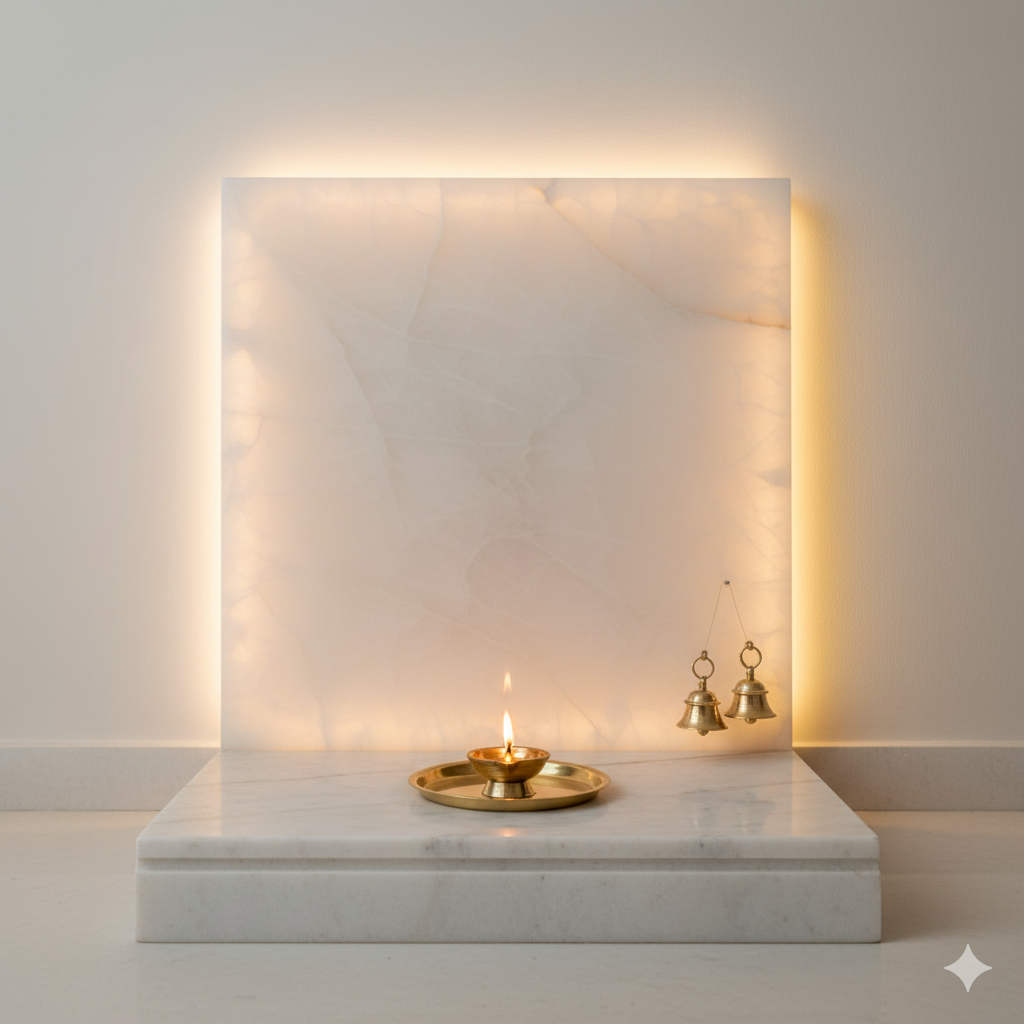
White or honey onyx as the backdrop with even backlighting, paired with a white marble platform. The glow is ethereal and works beautifully in living rooms and bedrooms where you want a soft spiritual presence.
Fluted or ribbed fascia
Vertical fluting in marble on the fascia or side jambs adds texture while remaining tonal. It frames the idol like a columned temple in a modern way.
Arched niche with marble inlay
A shallow arched recess clad in marble with a fine brass or contrasting stone inlay that outlines the arch. Refined and timeless for transitional interiors.
Carved jaali doors
CNC cut marble lattice doors or side panels filter light and scent. When closed, they turn the shrine into a calm sculptural element.
Floor mandir with plinth
A raised marble plinth with a modest step and a short back panel, ideal for dedicated pooja rooms. The height keeps the space distinct and comfortable for seated prayer.
Placement and orientation ideas that feel natural
North East is traditionally preferred for spiritual practice because it is associated with clarity and morning light. When the architecture does not allow that, create serenity through material and light: keep tones light, use even warm illumination, and ensure the area is clean and aired. Avoid placing the mandir directly under a staircase, in a cramped passage where people brush past, or facing a bathroom door. If the living room is the only feasible location, choose a quiet wall away from television glare and heavy traffic, and orient seating so the devotee faces East or North during prayer whenever possible.
Sizing, proportions, and layout that look balanced
Proportions decide the dignity of the shrine. A compact wall unit looks poised when the platform depth holds diya and prasad comfortably without crowding. A common sweet spot for small apartments is a platform depth in the twenty five to thirty centimetre range, with a back panel height that clears the idol height by a palm or two for visual breathing room. In dedicated rooms, consider a low plinth for seating comfort and a wider back panel to carry inscriptions, a subtle inlay, or a framed onyx glow. Keep circulation clear and provide a small kneeling or seating mat that does not slip.
Stone selection, finishes, and accents
White marbles such as Statuario, Carrara, and Makrana give a serene base. For warm homes, Botticino or Crema Marfil reads gentle and grounded. Use honed finish on platforms for a soft touch and better grip; use polished on vertical back panels for depth and light play. If you desire a divine centre, choose white or honey onyx only for the back panel and keep the platform in marble for durability. Brass details like a fine inlay line, bell hooks, or diya stands add warmth without clutter. If you love carving, use it sparingly on borders or a small shikhara profile so the shrine remains calm.
Lighting design for a calm, divine glow
Light should feel like a quiet dawn rather than a spotlight. Use warm white in the three thousand to thirty five hundred Kelvin range. Conceal LED strips behind the back panel edges to create a soft wash. Add a tiny recessed point above the deity if needed, angled to avoid harsh reflections. For onyx, design a shallow cavity with diffuser sheets so the glow is even and there are no hot spots. Place switches discreetly and include a dimmer so evening aarti feels intimate. Keep electricals away from diya flames and provide a safe surface for agarbatti.
Storage, wiring, and safety details you should not miss
Plan a slender drawer or shuttered niche below the platform for agarbatti, matchbox, kumkum, ghee wicks, and prasad plates. Use smooth runners so drawers do not rattle during prayer. Route wiring within a concealed channel and keep an accessible service hatch for drivers and adapters. Provide a small, heat resistant diya tray or brass plate on the platform to catch wax or ghee. Ventilation is essential. A small exhaust or a discreet grille prevents smoke buildup and keeps marble fresh. If pets or toddlers are present, consider low height diya stands or enclosed diya domes for safety.
Apartment friendly and rental friendly options
For rented homes, opt for a freestanding marble top unit with a stone or wooden carcass so it can move with you. A thin marble back panel can be mounted with minimal fasteners and removed later with patching. A floating shelf shrine with stick-on LED strips and a tabletop diya tray gives the marble look without heavy civil work. Keep sizes modular and finishes honed so touch up and transport remain easy.
Care and maintenance made simple
Wipe daily with a soft cloth. After aarti, clean ghee or oil drips promptly so they do not darken the stone. Use a pH neutral cleaner for weekly care and avoid acidic descalers. Place all incense and diya on trays so residues never sit directly on the stone. Seal the platform during installation and check sealing every six to twelve months depending on use. If smoke leaves a faint film over time, a gentle wipe with warm water and neutral cleaner restores clarity. For backlit onyx, dust vents occasionally so the illumination remains even.
FAQs
- Which marble colour suits a mandir best?
White and light creams are universally soothing and reflect diya light beautifully. Choose warmer beiges when your home palette leans earthy. Keep the base calm and let light do the rest. - Is polished or honed better for a mandir?
Use polished on vertical back panels for depth and glow. Use honed on the platform for grip and to reduce visible micro marks from daily use. - Can I place a marble mandir in the living room?
Yes. Choose a quiet wall, keep tones light, and use soft, concealed lighting. Provide a small drawer for essentials so the area stays tidy and dignified. - Is backlit onyx safe and practical?
Yes when used on the back panel only, with proper diffusion and adequate ventilation. Keep diya on a brass plate on the marble platform, not against the onyx. - How do I keep the mandir looking fresh over time?
Clean daily with a soft cloth, wipe oil and soot promptly, use pH neutral cleaners weekly, and reseal the platform on a realistic schedule. Good ventilation preserves both stone and lighting.
Conclusion
A beautiful marble mandir is the quiet heart of the home. When design, placement, and practical details work together, the space encourages daily pause without demanding attention. Start by choosing a calm marble palette and a proportion that fits your room. Place the shrine where light and movement feel gentle, and guide the experience with warm, concealed illumination rather than bright spots. Keep the platform honed for touch and safety, reserve polish or onyx for a serene backdrop, and plan slim storage so incense and puja items stay organised.
With a few simple habits; quick wipe downs after aarti, neutral cleaners, timely sealing, and good care ; our marble mandir will remain radiant for years. The result is a sacred corner that welcomes you every day, anchors your home in peace, and blends effortlessly with modern interiors.
Leave a Reply