
Onyx Marble: Uses, Colors and Why It’s Trending in Interiors
Onyx Marble: Uses, Colors and Why It’s Trending in Interiors
Introduction
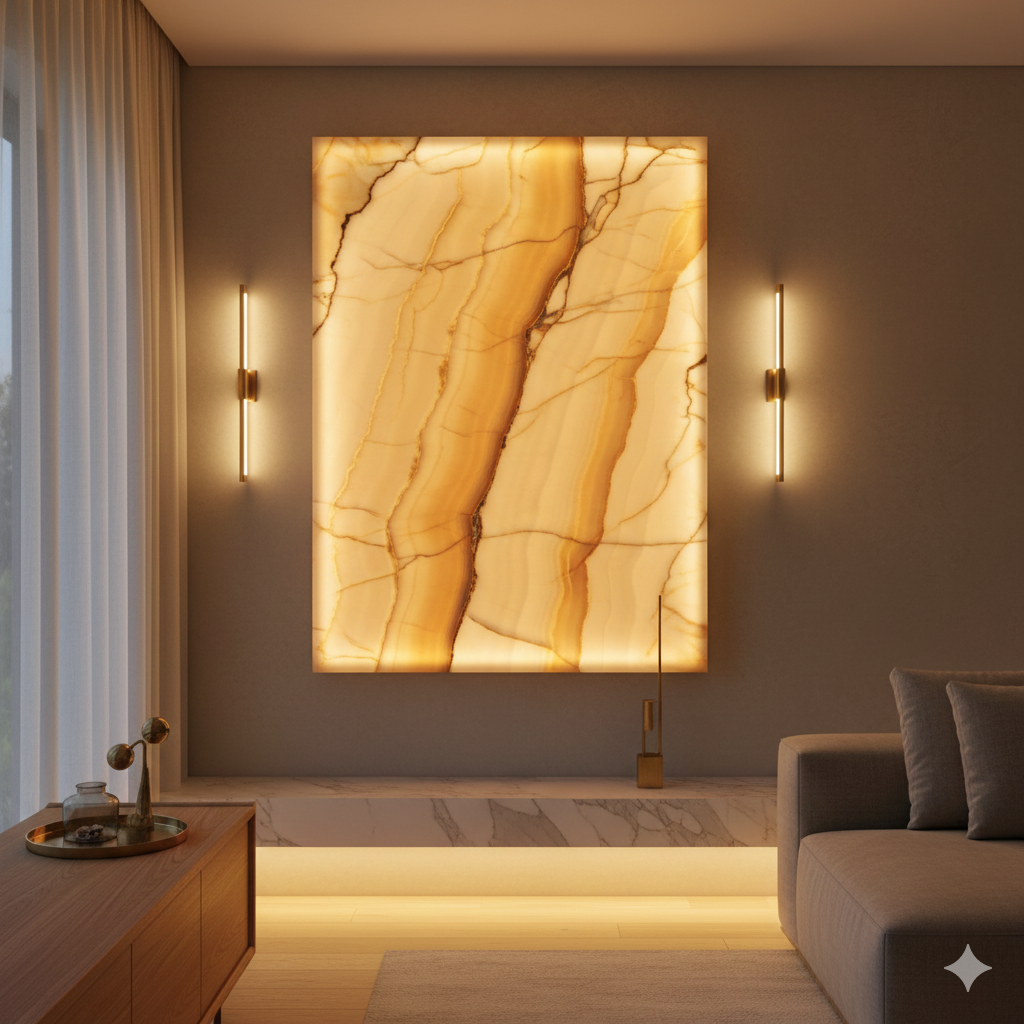
Onyx sits in a rare space between art and architecture. Unlike classic marbles that only bounce light off the surface, onyx allows light to pass through the stone, creating a soft inner glow that feels almost candle-like. That glow turns an ordinary wall into a focal point, makes a pooja corner feel devotional without bright glare, and gives a home bar or powder room a boutique mood instantly. The layered bands and clouds within onyx are formed over time in nature, so every slab reads like a sky study. One panel is enough to set the tone of the entire room and reduce the need for heavy decor.
In real Indian homes, beauty must walk with practicality. Onyx is best used where hands do not work all day and where you can control lighting and touch. That means vertical features, niche backs, vanities, reception desks, and calm bar fronts rather than the main kitchen worktop or a busy passage floor. Plan for warm lighting with an even diffuser, keep wiring accessible, and pair the stone with quiet materials like oak, walnut, lime paint, and brushed brass so the glow remains the hero. This guide explains exactly how onyx differs from regular marble, why it is trending now, which colors create which mood, where to place it for maximum effect, how to design the lighting cavity for a clean halo, what finishes and thicknesses look premium, how to care for it with gentle routines, and the buying checks that protect your project from selection to installation.
Index
- What onyx marble is and how it differs from regular marble
- Why onyx is trending in 2025 interiors
- Onyx colors and what mood each creates
- Best uses for onyx in real homes and hospitality
- Lighting design for backlit onyx without hotspots
- Finishes, thickness, and edge details that look premium
- What to pair with onyx materials, metals, and palettes
- Care, sealing, and daily maintenance
- Buying checklist tagging, vein planning, and delivery
- FAQs
- Conclusion
What onyx marble is and how it differs from regular marble
Interior onyx is a banded, translucent calcite stone often called onyx marble in the trade. It forms in layers, which gives it the unique ribbons and clouds that glow when lit from behind. Regular marbles like Statuario or Botticino are opaque and read through reflection rather than transmission. The takeaway is simple: choose onyx when you want light to pass through and create a halo, and choose classic marble when you want a calm reflective field for floors and large walls.
Why onyx is trending in 2025 interiors
Design is moving toward warm, sensory spaces and fewer but stronger gestures. Onyx fits this shift perfectly. A single backlit panel becomes the room’s hero and allows the rest of the decor to stay minimal. The glow also supports wellness oriented design, creating relaxed evening light for living rooms, bedrooms, pooja corners, spas, and lounges. Onyx works equally well in modern apartments and hospitality lobbies where brand memory depends on one unforgettable surface.
Onyx colors and what mood each creates
White Onyx
A clean, ethereal glow that works for pooja backdrops, spa like baths, and quiet living rooms. The light reads soft and devotional.
Honey Onyx
Golden warmth that flatters wood and brass. Perfect for bar fronts, dining backdrops, and intimate lounges.
Green Onyx
Soft greens with cream bands bring a fresh, serene mood. Great for vanities and accent walls when you want color without loudness.
Pink and Rose Onyx
Romantic and modern when used in small panels or niche backs. Pairs beautifully with brushed brass.
Multi Color and Rainbow Onyx
High drama for signature walls and boutique hospitality counters. Keep the surrounding palette extra calm to let the pattern breathe.
Best uses for onyx in real homes and hospitality
Backlit feature walls in living rooms and bedrooms where the panel is the focal point.
Pooja room back panels that create a divine halo behind the idols.
Bar fronts and niche backs where soft evening light sets the mood.
Vanity backsplashes and mirror surrounds in powder rooms for a boutique hotel feel.
Reception desks, spa entries, and restaurant partitions in hospitality projects.
Use onyx sparingly on horizontal tops and only in low splash, low heat areas. Avoid heavy kitchen worktops and high traffic floors.
Lighting design for backlit onyx without hotspots
Plan the light before you cut the slab. Create a shallow cavity behind the stone and line it with reflective white or aluminium to spread light. Use consistent, high quality LED strips or panels in warm white between three thousand and thirty five hundred Kelvin so the glow feels soothing, not clinical. Add diffusion sheets or an acrylic diffuser to prevent bright dots. Keep wiring accessible through a service hatch. When joining multiple panels, align bands and keep lighting segments on separate dimmable circuits to level brightness after installation.
Finishes, thickness, and edge details that look premium
On verticals, a polished finish deepens the glow and shows banding clearly. On low touch horizontal ledges, a honed finish softens glare and hides micro wear. Common thickness for cladding is in the range of eighteen to twenty millimetres. For backlit panels, many designers use thinner composite assemblies or reinforce the slab with honeycomb backing to reduce weight while keeping rigidity. Choose an eased edge for a modern line or a pencil round where fingers often touch. Keep joints minimal and plan grain flow across them.
What to pair with onyx materials, metals, and palettes
Wood tones such as oak and walnut ground the glow and prevent visual chill.
Metals like brushed brass and bronze add warmth without competing.
Quiet stones such as honed Botticino or Carrara floors let the onyx remain the hero.
Paint and plaster in lime or micro cement give soft, clouded backdrops around onyx.
In hospitality, pair Honey Onyx with leather and ribbed timber for a club luxe mood. At home, pair White Onyx with sheer curtains and soft textiles for serenity.
Care, sealing, and daily maintenance
Seal during installation and check sealing every six to twelve months based on use. Clean with a pH neutral stone cleaner and a soft cloth. Avoid acids and harsh alkalis. Keep diyas and incense on brass or stone trays if the onyx is in a pooja area. For backlit walls, dust ventilation slots occasionally so heat can escape and LEDs last longer. Treat onyx as a jewellery piece in your home, light it well, handle it gently, and it will look pristine for years.
Buying checklist tagging, vein planning, and delivery
View full slabs in daylight. Shortlist the panel whose banding suits your room width and height. Approve a vein layout so book match lines or flow lines read as one story across joints. Tag the exact slabs, record lot numbers, and photograph your selection. Confirm thickness, finish, and any reinforcing method in writing. For backlit zones, test a sample with your chosen LED temperature before fabrication so the final color reads as intended.
FAQs
- Is onyx strong enough for kitchen countertops?
It is best as a feature material, not for heavy prep zones. Use on islands only if cooking is light, choose a honed finish, seal well, and keep trivets and coasters handy. For main worktops, pick a tougher companion surface. - What color temperature should I use for backlighting?
Warm white between three thousand and thirty-five hundred Kelvin creates a calm, premium glow. Use diffusion to avoid hotspots and place lighting on a dimmer. - Can onyx be used on floors?
Reserve it for low traffic, low-impact areas or inlays. It is too precious for busy passages and rough outdoor use. - How thick should a backlit onyx panel be?
Cladding is commonly in the eighteen to twenty millimetre range. For large, thin, or suspended panels, consider honeycomb backing or a tested composite system to reduce weight and improve stability. - How do I clean onyx safely?
Use a pH-neutral cleaner and a soft cloth. Avoid vinegar, bleach, acids, hard descalers, and abrasive pads. In pooja areas, place diyas and agarbatti on trays to avoid soot or oil touching the stone.
Conclusion
Onyx is the most efficient way to add high-impact luxury with very few elements. One well chosen panel can set the emotional tone of a room from morning calm to evening warmth. Start by picking the color for the feeling you want: White for serenity in a pooja or bath, Honey for intimate living and dining, soft Green for freshness in bedrooms and vanities, and multi-tone for a single signature wall in hospitality. Next, treat lighting as part of the stone. Build a clean cavity, line it for even spread, add proper diffusion, and place the system on a dimmer so you can shift from daylight brightness to a soft night glow. Pair the panel with quiet companions, oak, walnut, lime-washed walls, and brushed brass so the stone remains the focus.
Keep usage smart. Place onyx where eyes linger, and hands rarely work. Use polished on verticals and honed on low-touch ledges. Protect with gentle sealing and simple daily care. Control the purchase with lot numbers, tagged slabs, and a vein layout so the pattern reads as one story across joints. Test a small sample with your chosen LEDs before fabrication so the final colour is exactly what you imagined. When you follow this process, onyx stops being a risky indulgence and becomes a dependable design strategy. The result is a home or hospitality space that feels rich without clutter, modern without coldness, and memorable every time the lights come on.
Leave a Reply