
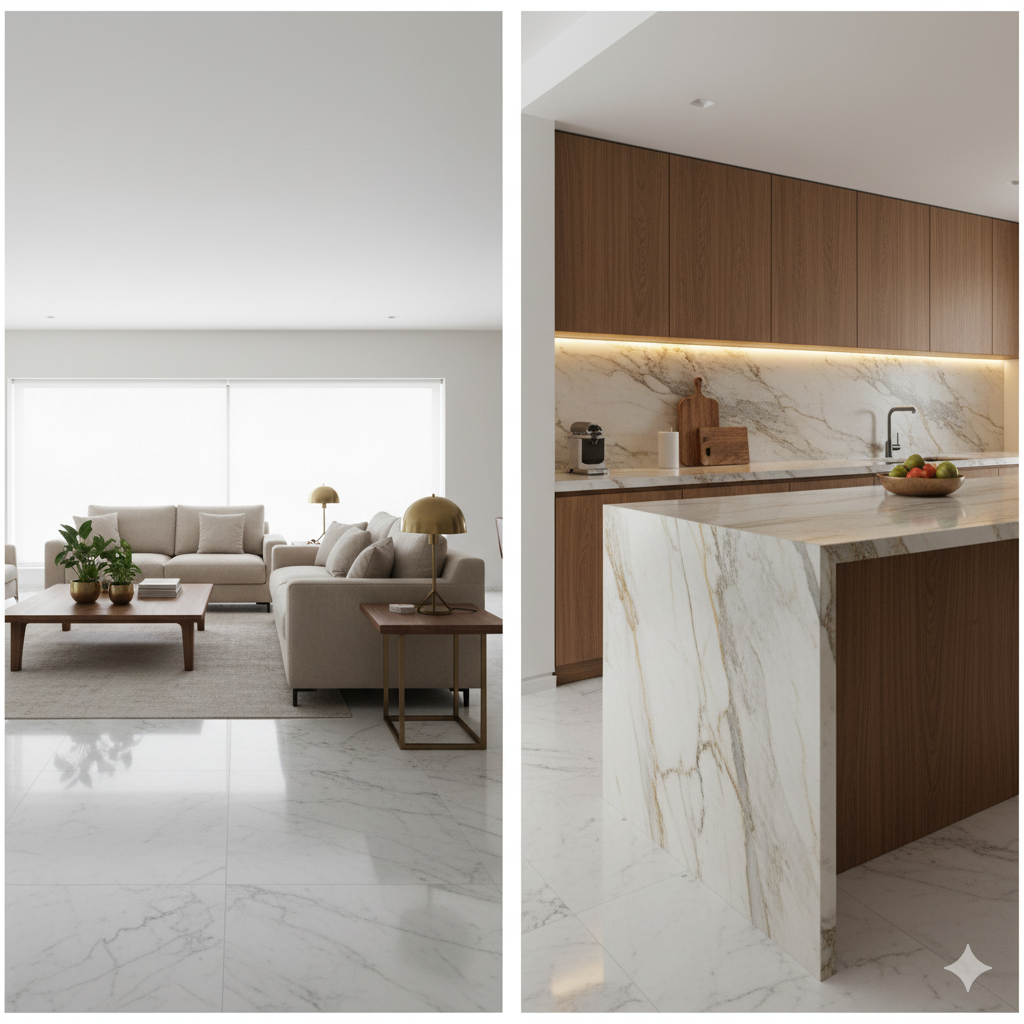
How to Choose the Right Marble for Flooring vs Countertops
Introduction
Marble can make a home feel brighter, larger, and more refined. The same stone behaves very differently on a busy floor and on a kitchen or vanity counter. Floors need grip, low glare, and patterns that age gracefully with daily traffic. Counters need stain resistance, smart finish choices, and edges that are comfortable to live with. This in depth guide explains how to choose confidently for each surface. You will learn what really matters in Indian conditions, from daylight and dust to oil based cooking and festival footfall. You will also see clear finish and thickness recommendations, room by room picks, and a buying checklist that prevents costly rework.
Index
- Introduction
- How floors and counters demand different performance
- Floor selection guide appearance safety care and cost
- Countertop selection guide kitchens and bathrooms
- Finishes that change both look and durability
- Thickness and edge profiles that feel right in daily use
- Room by room recommendations you can apply today
- Common mistakes and how to avoid them
- Buying checklist before you cut a single slab
- FAQs
- Conclusion
How floors and counters demand different performance
Floors are the largest visual surface in a home. They must look calm through the day, hide daily dust, and feel safe underfoot. That points to finishes that reduce glare and patterns that do not shout. Counters are smaller but face intense local stress from knives, hot pots, oils, turmeric, lemon, vinegar, coffee, and cosmetics. They are touched dozens of times each day and washed often. That points to finishes that disguise micro wear and an aftercare routine that is simple to follow. Understanding these two very different jobs is the first step to choosing the correct marble for each location.
Floor selection guide appearance safety care and cost
Begin with the light in your rooms. Very bright spaces can carry white marbles like Carrara and Statuario on selected floor panels. Most Indian homes feel more comfortable with warm beiges such as Botticino and Crema Marfil because they hide day to day dust better and feel hotel like without glare. For floors, a honed finish is the quiet hero. It has a satin look, reduces reflections, and gives better foot grip. If you love mirror shine, use polished only in formal zones with controlled traffic and keep good door mats to cut micro grit.
Plan movement across large areas. When you choose a veined stone for flooring, ensure the overall pattern feels calm when seen from the entrance. Ask your fabricator to map how pieces will run across the living room, passages, and into bedrooms so the flow feels intentional. Seal floors on installation and plan a reseal every six to twelve months depending on traffic. Clean with a pH neutral solution and avoid harsh acids or alkalis. These small habits keep marble floors looking new for years.
Countertop selection guide kitchens and bathrooms
Kitchen counters face the toughest mix of stains and heat in an Indian home. If you love the luxury of marble, set realistic rules. Choose honed or leathered finishes because they disguise micro etching and small scratches better than a mirror polish. Seal thoroughly on day one. Keep a soft cloth within reach and wipe oil, turmeric, lemon, and vinegar quickly. A popular layout keeps the marble on the island and the backsplash where you see it most, and uses a tougher companion surface on the main prep counter. You get the look and you keep peace of mind.
Bathroom vanities and walls allow more freedom because the stress is different. Polished marble on walls creates a spa-like glow and looks spectacular under warm lighting. Vanities benefit from honed or leathered finishes that hide water marks and feel premium to the touch. Plan proper ventilation so moisture does not sit. Use gentle cleaners and avoid abrasive pads on both kitchens and bathrooms.
Finishes that change both look and durability
Polished has mirror depth and a glamorous feel. It is ideal for walls and formal living zones where traffic is controlled and reflection is welcome. Honed has a satin matte look. It softens light, hides micro scratches, and gives better grip on floors. It is also the first recommendation for busy kitchen and vanity counters. Leathered also called brushed adds texture that feels premium and masks daily wear. It is a beautiful choice for islands, vanities, and accent counters. Choose the finish by function first and then by appearance.
Thickness and edge profiles that feel right in daily use
Floors and wall cladding commonly use eighteen to twenty millimetre thickness. Kitchen and vanity counters usually use twenty to thirty millimetre thickness depending on span and support. Thicker tops feel substantial and allow deeper edges if your design calls for them. For edges, an eased edge gives a crisp modern line with comfortable touch. A pencil round softens the corner which is great for family kitchens. A full bullnose creates a classic profile for traditional interiors. Decide early because thickness and edge choices influence the overall look and the installation method.
Room by room recommendations you can apply today
Living room floors feel timeless with Botticino or Crema Marfil in a honed finish. They reflect light softly and photograph beautifully with beige and taupe furnishings. If your living room is very bright and modern, Carrara in a honed finish brings a calm white canvas without visual noise. Use Statuario or Calacatta for a television wall or a select floor panel to create a hero moment.
Kitchens benefit from honed or leathered Carrara or Calacatta on islands and backsplashes. Seal well and keep a pH neutral cleaner handy.
Bathrooms look rich with polished Statuario or Carrara on walls and honed Botticino or Crema Marfil on floors for grip.
Staircases feel safe and elegant with honed Carrara, Botticino, or Crema Marfil and a properly detailed nosing.
Pooja rooms look serene with white marbles on platforms and back panels. If you want a glow, use backlit White Onyx or Honey Onyx for the backdrop, keeping it as a low touch feature.
Common mistakes and how to avoid them
Choosing only from a tiny sample is the number one error. Always see full slabs under good light to understand the real movement and tone. Using high gloss polish on every surface is another mistake. Floors and counters do better with honed or leathered finishes, while walls can enjoy the shine. Skipping a vein layout leads to awkward joints and broken flow across passages and feature walls. Not sealing on time or using harsh cleaners shortens the life of the finish. A little planning prevents all these problems.
Buying checklist before you cut a single slab
Define the mood for each room first. Shortlist two or three stones that support that mood. Decide the finish by function. View full slabs and approve a vein layout drawing. Confirm thickness and edge profile for every counter and step. Seal during installation. Set up a simple aftercare kit with soft cloths and a pH neutral cleaner. Share the reseal schedule with your housekeeping team. With these steps your project runs smoothly from selection to handover.
FAQs
- Which finish is best for flooring in Indian homes?
Honed is the most dependable finish for floors. It gives a soft elegant look, improves foot grip, and hides micro scratches better than a mirror polish.
- Can I use marble for kitchen countertops in India?
Yes when you choose honed or leathered finishes, seal very well, and wipe spills promptly. Many homeowners keep marble on islands and backsplashes and use a tougher companion surface on the main prep area.
- What thickness should I select for counters?
Twenty to thirty millimetres is typical for kitchen and vanity counters. Larger spans and bold edges often look and perform better at the thicker end of that range.
- How do I stop stains and etching on counters?
Seal on installation. Keep a soft cloth within reach. Wipe turmeric, oils, lemon, vinegar, wine, and coffee as soon as you notice them. Clean daily with a pH neutral solution and avoid harsh chemicals.
- Do polished marble floors always feel slippery?
Polishing reflects more light and shows micro wear faster. For daily comfort and safety, choose honed for floors and keep polished for walls or select feature panels.
- How do I plan the look across large rooms
Ask your fabricator for a vein layout drawing before cutting. This plan shows how each piece will be placed so the flow reads as one continuous canvas through living rooms, passages, and feature walls.
Conclusion
Floors and counters are very different jobs. Floors need calm patterns, low glare, and reliable grip. Counters need smart finishes, timely sealing, and edges you enjoy touching every day. Choose honed for most floors and for all hardworking counters. Use polished on walls and special features where reflection adds to the mood. Approve a vein layout, confirm thickness and edge details, and seal on time. With these choices your home will look refined on day one and stay beautiful through years of real living.