
Vastu Benefits of Marble in Homes and Temples
Vastu Benefits of Marble in Homes and Temples
Â
Introduction
Vastu Shastra is about flow. When rooms, materials, and light align with natural directions, a home feels calm, purposeful, and welcoming. Marble works beautifully inside this framework because it is grounded, reflective in a gentle way, and timeless. The right colour, finish, and placement guide energy through the house, from the threshold to the heart of the home. In Indian conditions there are practical needs as well such as dust, humidity, festival foot traffic, and oil based cooking. A Vastu aligned marble plan must therefore balance purity with daily comfort. This guide explains how different marbles influence mood, which directions and rooms benefit most, how to plan a marble mandir that feels sacred and easy to maintain, and what to do when architecture forces compromises. Use these ideas to shape a home that looks refined and feels quietly positive every day.
Index
- Why marble aligns well with Vastu
- Direction wise guidance colours and intent
- Room wise placement entrance living kitchen bedrooms bathrooms and stairs
- Marble mandirs designs benefits and placement ideas
- Finishes in Vastu polished honed and textured when to use which
- Patterns borders and inlays that support flow
- Practical remedies when layouts are fixed
- FAQs
- Conclusion
Why marble aligns well with Vastu
Marble is natural and stable which supports the grounding aspect of Vastu. Its subtle reflectivity amplifies daylight without glare so rooms feel open and calm. White and light beige marbles symbolise purity and clarity which is helpful at the entrance and in sacred corners. Dark accents used carefully bring focus where required such as a niche that anchors a long passage. Because marble can be finished in different ways you can tune it to the function of the room while keeping a consistent material story across the home.
Direction wise guidance colours and intent
North East is associated with clarity and spiritual focus. White marbles such as Statuario and Carrara or very light creams suit this zone.
East favours activity and gentle growth. Soft whites and light beiges keep mornings bright and balanced.
North relates to calm work energy. Light grey or greige tones with minimal movement support concentration in studies and home offices.
South East is the kitchen direction. Choose calm beiges or honed whites that resist glare and pair them with a sensible finish for daily cooking tasks.
South and South West benefit from warmer tones that feel steady and grounded. Beiges like Botticino and Crema Marfil help bedrooms feel restful.
The West enjoys soft light in the evening. Balanced whites or greiges keep this zone comfortable without feeling dark.
These are guiding ideas. The priority is a coherent palette that flows from room to room so the home reads as one story.
Room wise placement entrance living kitchen bedrooms bathrooms and stairs
Entrance and foyer
The threshold sets intent. A light marble floor with a simple border invites clarity. Avoid cracked or heavily patched pieces near the door. Keep the surface honed if the entrance is directly outdoors so it remains safe when wet.
Living room
Use lighter floors for openness and place the visual weight on a single feature such as a book matched wall. The goal is a balanced centre rather than many competing accents. Keep circulation paths clear so movement remains easy.
Kitchen
Favour honed or leathered finishes for grip and comfort. Light beige floors feel stable and hide daily dust. If you love white, use it on the island or backsplash and pair the main worktop with a tougher companion surface. This keeps the Vastu preference for lightness while respecting daily use.
Bedrooms
Warm creams and beiges help the body unwind. Floors in honed finish create a soft base. If you prefer white, select a stone with gentle movement rather than strong contrast so the room stays calm.
Bathrooms
Polished white marble on walls reflects light and feels clean. Honed beige or greige on the floor improves footing. Place mirrors to bounce light within the room and avoid directly facing the door if possible.
Stairs and passages
Consistent tones help energy flow smoothly through the house. A honed finish with a clear nosing detail improves safety. Use a subtle border to guide movement in long passages instead of abrupt pattern changes.
Marble mandirs designs benefits and placement ideas
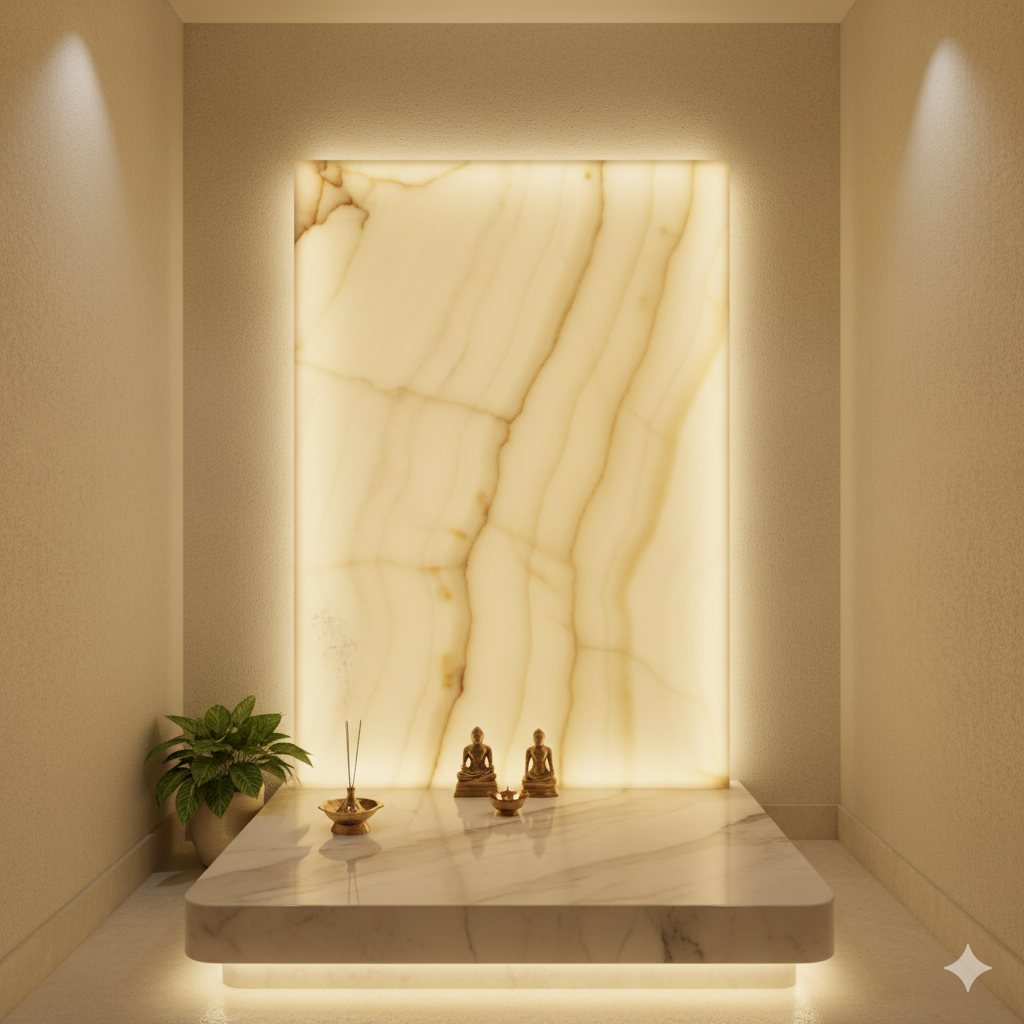
A marble mandir benefits from purity, simplicity, and even light. White marble platforms symbolise clarity and are easy to clean after diya and prasad. A back panel in white onyx or honey onyx adds a soft glow that supports focus during prayer while remaining gentle on the eyes.
Placement matters. North East is traditionally preferred when the layout allows. If the mandir sits elsewhere, use light tones and warm dimmable lighting to preserve serenity. Keep the area ventilated so incense and ghee lamps do not mark the surface.
Design details influence mood. A small raised plinth keeps the space set apart. A shallow ledge helps keep the area tidy. Carved panels or subtle CNC patterns can be used in moderation to add sacred texture without visual clutter.
Finishes in Vastu polished honed and textured when to use which
Polished marble symbolises clarity and is ideal for walls and vertical features in formal rooms and mandirs where light adds depth.
Honed marble feels grounded and is recommended for floors in living rooms, kitchens, passages, and bedrooms. The satin surface reduces glare which is calming for the eyes and offers better grip which is calming for the body.
Textured finishes such as leathered or brushed provide tactile richness on islands, vanities, and accent counters. In spiritual spaces a lightly honed surface often reads the most serene.
Patterns borders and inlays that support flow
Keep geometry simple so energy does not feel broken. Large format pieces with aligned veins create gentle direction without distraction. Borders can guide movement when used sparingly around the perimeter or to frame a seating zone. Inlays in brass or a contrasting stone can mark sacred areas or thresholds without overwhelming the room. Avoid sharp zigzag cuts at entries and in the mandir. Rounded edges and well planned junctions feel kinder and look refined.
Practical remedies when layouts are fixed
Many apartments cannot rotate rooms to ideal directions. You can still support Vastu intent through material choices and light.
One. Keep the palette lighter in rooms that feel heavy or enclosed.
Two. Add a soft focus feature in the living room such as a calm book matched wall so the eye settles.
Three. Use a defined marble border to stabilise long passages.
Four. In kitchens that receive low light, choose a lighter honed floor and reflective but not glossy wall panels so the space does not feel dull.
Five. In a mandir placed away from the North East, lean into purity with white marble, gentle backlighting, and regular cleansing.
Six. Maintain cleanliness and prompt repair of chipped corners and cracked pieces. Care and intent are strong Vastu corrections by themselves.
FAQs
- Which marble colour is best for a Vastu friendly home?
Whites and light creams are most supportive at the entrance and in sacred areas. Warm beiges keep bedrooms and large floors calm. Use darker stones as focused accents rather than main surfaces. - Is polished or honed better for Vastu?
Use polished on walls and sacred panels for clarity and light. Use honed on floors for grounded stability and safer footing. The mix keeps the home bright yet calm. - Where should a marble mandir be placed?
The North East is traditional. If that is not possible, create serenity with white marble, even warm lighting, and good ventilation. Keep the platform clean and clutter free. - Can I combine white marble with darker accents?
Yes. Keep the base light and use dark accents to frame niches or create modest borders. The aim is a steady centre rather than high contrast everywhere. - How do I maintain Vastu benefits over time?
Follow a simple routine. Clean with a pH neutral solution, wipe spills quickly, reseal on a regular schedule, and repair chips before they spread. A well cared for surface holds intent.
Conclusion
Vastu aligned design begins with clarity of purpose and consistency of material. Marble helps achieve both. Light tones invite openness at the entrance and in the pooja room. Warm beiges settle large floors and bedrooms. Finishes shape behaviour as much as colour. Polished panels lift sacred walls and formal areas while honed floors keep daily life quiet and safe. Patterns and borders guide movement when used with restraint. When architecture does not allow a textbook layout, you can still express Vastu intent through light, cleanliness, and mindful detailing.
Plan your home around a simple marble palette that flows from one room to the next. Approve vein layouts so the eye moves smoothly. Choose finishes by function and keep a steady care routine. The result is a house that looks refined, feels restful, and supports a positive rhythm for the family every day
Leave a Reply