
Marble vs Quartz: Which Is Better for Countertops
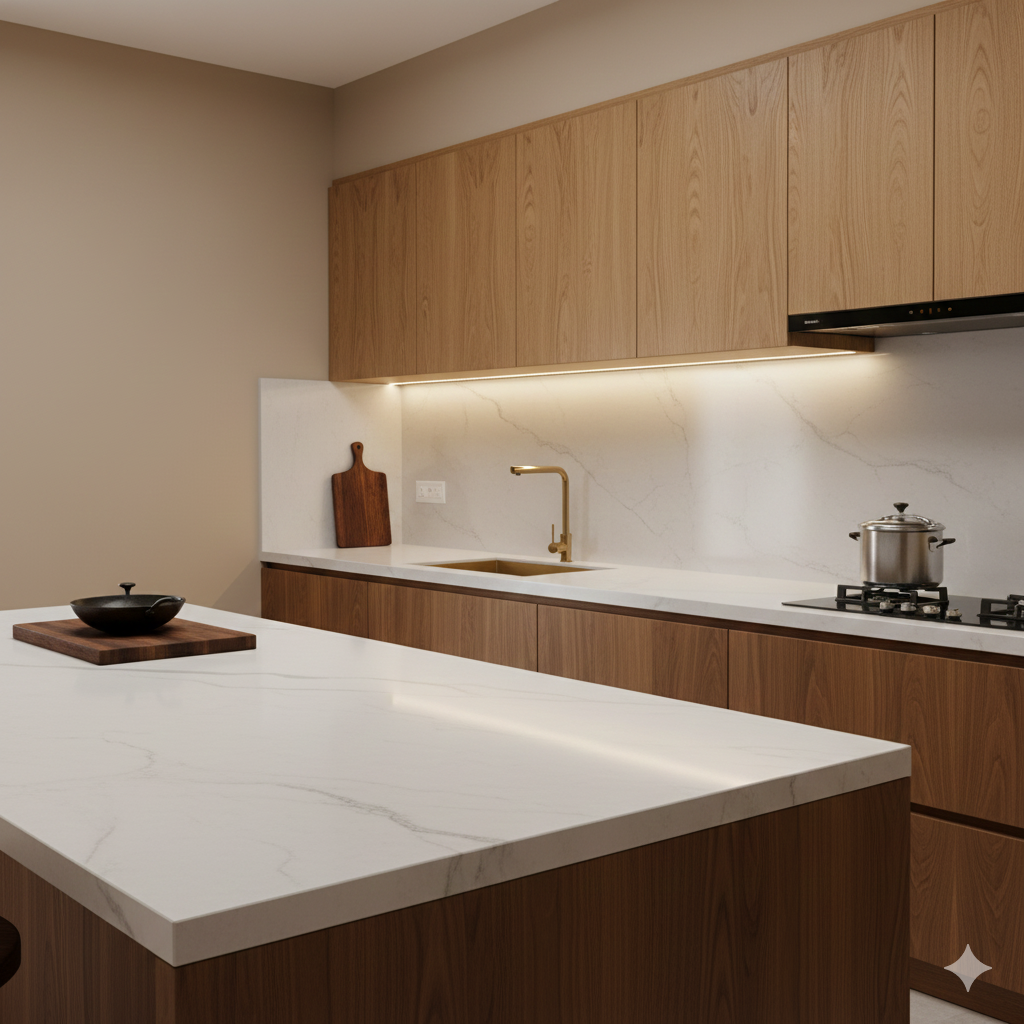
Marble vs Quartz: Which Is Better for Countertops
Introduction
When you search for a premium kitchen counter, the choice quickly narrows to marble vs quartz. Both look elegant, both can last for years, and both appear in high end homes. Yet they behave very differently in daily Indian cooking where you have oil splashes, turmeric, lemon, pressure cooker steam, tea and coffee, and quick wipe downs many times a day. The right decision depends on how you cook, how much time you want to spend on care, and the feeling you want the room to carry.
This guide explains the real world differences in plain language. You will learn how each material handles heat and stains, why finish choice matters more than most people think, how thickness and edge profiles change comfort, what to expect on price and lifetime value, and a simple mix and match plan that gives you a beautiful island and a worry free prep zone. By the end, you will know exactly where marble shines and where quartz is smarter, so your kitchen looks premium on day one and stays easy to live with for years.
Index
- Appearance and design mood
- Daily durability heat scratch and stain behavior
- Maintenance and cleaning routines you can actually follow
- Finish choices that change both look and upkeep
- Thickness and edge profiles for comfort and strength
- Costs budgeting and lifetime value
- Health and sustainability notes
- Best use cases and mix strategies
- FAQs
- Conclusion
Appearance and design mood
Marble reads like natural art. Its veins have depth and gentle movement that change with light through the day. A marble island or backsplash becomes the hero of the room and photographs beautifully with minimal decor.
Quartz is an engineered stone made from crushed quartz and resin. It is available in highly consistent whites, greys, beiges, and also in marble look patterns. The look is controlled and uniform, which many homeowners love for a clean modern shell. If you prefer nature’s randomness and a soft glow, choose marble for the showpiece area. If you like exact repeatable tones across many slabs, quartz gives that control.
Daily durability heat scratch, and stain behaviour
Heat
Marble tolerates brief warmth but can suffer from extreme thermal shock. Use trivets near the stove. Quartz contains resin that can discolour or mark from very hot pots. Trivets protect both materials and keep finishes even.
Scratches
Marble is softer on paper and can pick micro scratches if grit is dragged. In practice a honed finish hides these marks well. Quartz is harder day to day and shrugs off incidental wear, though sharp impacts on edges can still chip.
Stains and acids
Marble can etch from lemon juice and absorb oils if spills sit. A honed or leathered finish with proper sealing and quick wipe habits makes this easy to manage. Quartz resists many stains but can be affected by strong dyes or chemicals. Follow the brand’s cleaner list.
Maintenance and cleaning routines you can actually follow
Marble
Seal on installation. Wipe spills when fresh. Clean with a pH neutral stone cleaner or mild soap in water and finish with a dry cloth. Reseal on a six to twelve month check depending on use. If the surface looks tired after years, a professional rehome or repolish brings it back close to new. Quartz
No sealing required. Daily cleaning with mild soap and water is usually enough. Avoid harsh solvents or strong heat. Restoration options are limited compared to marble, so heavy damage may need replacement.
Finish choices that change both look and upkeep
Marble
Honed gives a satin matte glow, reduces glare, improves grip, and disguises micro etches and scratches. Leathered adds a soft texture and hides fingerprints. Polished looks cinematic on verticals and low splash zones.
Quartz
Comes mostly in polished and matte variations depending on the brand. Polished quartz is easy to wipe but can show streaks under raking light. Matte hides marks but still needs simple daily cleaning.
Thickness and edge profiles for comfort and strength
Common countertop thickness ranges from twenty to thirty millimetres. Slim looks contemporary and suits modern islands. Thicker profiles feel substantial and allow deeper edge treatments.
Edge profiles change comfort. Ease is clean and modern. Pencil round is gentle for family kitchens. Full bullnose reads classic. Decide edges early because they affect fabrication, cost, and how the counter feels to the hand during daily use.
Costs budgeting and lifetime value
Upfront price depends on brand, colour, and slab size. Popular white marbles and designer quartz colours sit at similar levels, while ultra premium marbles and boutique quartz lines cost more.
Lifetime value differs. Quartz wins on low effort from day one. Marble wins on renewability because it can be restored after years instead of replaced. The smartest spend for most homes is a mix that places investment where it shows and practicality where the work happens.
Health and sustainability notes
Both surfaces are food safe when installed correctly. Use cutting boards on all counters to protect the finish and your knives.
Sustainability is about long life and low replacement. Natural marble can be restored many times and used for decades. Quartz offers long service too, but heavy damage is usually not repairable to factory finish.
Best use cases and mix strategies
Choose marble when you want a statement island, a full height backsplash that glows in photographs, a calm ledge or window seat, or a spa style vanity. Use honed or leathered finishes in busy zones and polished on verticals.
Choose quartz when you want a hard working main prep counter beside the cooktop, a low care rental unit kitchen, a teenager study table that will see craft projects, or utility counters and outdoor kitchens where permitted by the brand.
The winning 2025 layout for many Indian homes is a honed marble island plus a quartz back counter. You enjoy the beauty of natural stone at the centre and the low worry work surface where oil and knives live.
FAQs
- Which is better for heavy Indian cooking?
Quartz is safer for the main prep run because it resists stains and casual scratches better. Keep trivets for very hot vessels. If you love marble, use it on the island and backsplash and seal well. - Does marble always stain and etch?
It can when spills sit. In practice a honed or leathered finish, sealing on installation, and quick wipe habits make marble easy to live with, especially outside the high heat splash zone. - Can quartz exactly match the look of marble?
Quartz offers convincing marble look designs with consistent backgrounds and controlled veins. Marble still has natural depth and randomness that is unique. Decide if you prefer uniformity or nature’s variation. - What thickness should I choose?
Twenty to thirty millimetres works well. Slim modern islands look elegant at twenty with an eased edge. Heavier spans and classic kitchens feel right at twenty five or thirty. - If the budget allows only one, which should I pick?
Choose based on lifestyle. For low maintenance choose quartz for the whole kitchen. For maximum visual impact choose marble and be mindful of care or pair it with quartz in the heavy prep zone.
Conclusion
The marble vs quartz decision is not a contest so much as a choice of roles. Marble gives emotional value through light, movement, and touch. It turns an island or a backsplash into a signature moment and can be renewed years later with professional polishing. Quartz gives operational confidence through uniform strength and simple maintenance. It performs calmly beside the stove and around the sink where most spills and scratches happen.
Start by mapping your kitchen into two zones. Place marble where eyes linger and hands touch gently the island, the dining ledge, the full height backsplash away from intense heat. Place quartz where hands work the longest, the main prep counter, the sink run, the coffee corner that sees daily drips. Lock finishes by function, choose comfortable edges, confirm thickness in writing, and approve slab selections and colours before fabrication. Seal marble on installation and keep a pH neutral cleaner routine for both materials. Done this way, you enjoy the beauty of natural stone and the confidence of engineered performance in one balanced kitchen that looks premium and lives even better.
Leave a Reply