
Top Marble Export Trends from India in 2025
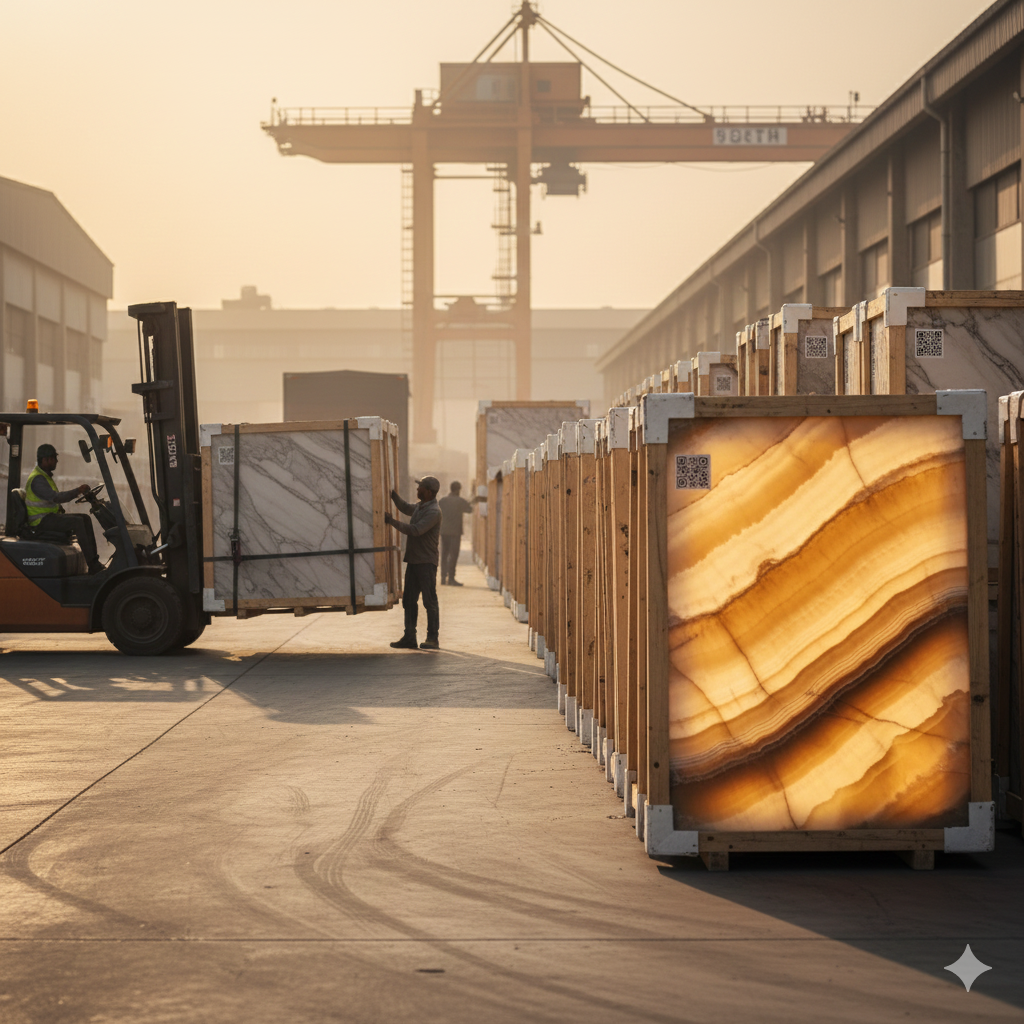
Top Marble Export Trends from India in 2025
Introduction
India’s marble export industry enters 2025 with a renewed sense of momentum, scale, and global recognition. Once known primarily for classic stones like Makrana and Rajasthan whites, India is now emerging as a design-forward, technology-enabled, and globally competitive supplier of premium marble and luxury surface materials. The world’s leading architecture firms, hospitality chains, and luxury home developers are increasingly looking to India not only for volume, but for exclusive colours, advanced processing, and dependable quality control.
Global demand is shifting fast; from standard materials to signature-pattern marbles, reinforced large-format slabs, precision bookmatched sets, and backlit-ready translucent stones. With major markets such as the US, Europe, the Middle East, and Australia seeking fresh aesthetics and reliable long-term sourcing partners, India has stepped into a stronger role. The country’s exporters have invested in CNC machining, resin line upgrades, automated polishing systems, enhanced slab tracking, and improved international logistics, making Indian marble an attractive package for both small boutique buyers and commercial-scale developers.
Alongside this nationwide growth, leading exporters are reshaping how the world experiences marble. From curated slab galleries to digital lot selection, from on-site quality checks to project-wise vein planning, Indian suppliers are no longer just selling stone; they’re delivering a premium, end-to-end sourcing experience. Brands like Earthen Pearl reflect this new direction, offering global buyers storytelling, craftsmanship, and technical excellence under one roof.
As sustainability, originality, and reliability become top global priorities, India’s marble export sector is not just expanding; it’s evolving into a world-class ecosystem of design, technology, and natural beauty.
Index
- Big-picture export numbers & market outlook
- What buyers are ordering in 2025 (materials & colours)
- Manufacturing & tech trends lifting exports
- Trade routes, top destinations and logistics shifts
- Sustainability, traceability and “Made in India” momentum
- How Earthen Pearl fits in; strengths and opportunities
- Practical advice for international buyers and specifiers
- FAQs
- Conclusion
Big-picture export numbers & market outlook
India’s marble sector is part of a broader stone market that analysts value in the billions. Recent market research estimates India’s marble market at about USD 4.02 billion in 2024, with a forecast to reach roughly USD 6.2 billion by 2030; a sign that both domestic projects and exports will continue to grow.
Export activity itself has been significant: between March 2023 and February 2024 India recorded over 157,000 marble shipments, showing large exporter and buyer participation and a healthy global demand base. Top buyer markets include the United States, United Kingdom and Australia, among others.
At the same time, short-term ripples from geopolitics and sourcing shifts (for example a move to reduce reliance on certain suppliers) are reshaping trade flows; creating openings for Indian exporters to capture more market share.
What buyers are ordering in 2025 (materials & colours)?
The palette travelling out of India in 2025 is broader than just classic whites. Key trends among international buyers:
- Coloured & patterned marbles: green, brown and gold rainforest patterns and richer beige families are in demand for boutique hotels and high-end retail.
- Backlit onyx and translucent slabs: onyx and thin translucent marbles are specified for feature walls, reception desks and bar fronts. Buyers want tested backlit assemblies (diffusers, LED specs and reinforced backing).
- Travertine and textured finishes: warm, tactile surfaces for hospitality and resort projects. Earthen Pearl’s travertine collections are an example of this shift.
- Vein-matching and bookmatching: deliverable slab planning and lot tagging are now a standard request from architects specifying for photography and continuity.
These choices reflect both aesthetic and functional demands: buyers want stones that photograph well, age gracefully, and can be specified with lot-level traceability.
Manufacturing & tech trends lifting exports
Two production themes support India’s export push:
- Larger, automated processing hubs: bigger factories with CNC, water-jet, and honeycomb reinforcement capabilities let exporters supply lighter, thin-backed slabs suitable for shipping and backlit installations. Earthen Pearl highlights a sizable processing campus and modern equipment as part of its value proposition.
- Value-added prefabrication: exporters increasingly offer cut-to-size panels, finished edges, pre-drilled fixings, and packaged installation kits so overseas installers receive near-ready components (reducing on-site time and risk).
Together these trends reduce lead times and damage risk in transit while giving buyers predictable, spec-ready stone.
Trade routes, top destinations and logistics shifts
Historically, Indian stone has headed to established markets like North America, Europe, and Australia. Export data shows a strong buyer base in these regions, and shippers have developed routings that prioritise slab crating standards, insurance, and consolidated shipments to reduce cost per square metre.
Recent months also show a tactical uplift in sourcing from domestic quarries and processors to reduce geopolitical exposure and transit complexity; a trend amplified by industry calls to reassess imports from politically sensitive origins. That shift benefits Indian processors and shortens supply chains for many buyers.
Sustainability, traceability and “Made in India” momentum
Global buyers increasingly ask for environmental and social transparency: water recycling at factories, responsible quarrying, waste-minimising slab layouts, and verified labour practices. India’s larger players are responding with better documentation and waste reuse strategies. These changes help Indian exporters compete not only on price and style but on credible sustainability claims; a growing purchase criterion in Europe and North America.
How Earthen Pearl fits in; strengths and opportunities
Earthen Pearl’s public positioning highlights several export-ready strengths:
- Curated collections and variety: Their site shows a broad offering (marble, travertine, coloured ranges) that fits current export tastes.
- Processing scale & tech: Earthen Pearl references a multi-acre factory and modern technology; important when buyers request prefabricated, reinforced, or backlit-ready panels.
- Brand & traceability potential: With offices and contact points in Mumbai and visible online presence, Earthen Pearl can scale export relationships by offering slab tagging, lot photos, and logistics-ready packing information.
Opportunities for Earthen Pearl to sharpen exports in 2025:
- Publish lot-level traceability and environmental statements (water recycling, energy consumption) to win EU/UK tenders.
- Develop ready-to-install backlit onyx systems with sample lighting mockups to reduce buyer risk.
- Target niche markets (boutique hotels, design studios, luxury retail fit-outs) with curated sample boxes and digital slab view tools.
- Use consistent SKU and packaging standards to reduce customs friction and damage claims.
Practical advice for international buyers and specifiers
If you specify Indian marble in 2025, consider these checklist items:
- Ask for full slab images and vein layout mockups before cutting.
- Confirm backing, reinforcement and whether the slab is suitable for backlighting or thin application.
- Request sealed sample crates and test a small delivered panel for colour and translucency.
- Insist on exported slab tagging and a photographed LOT file with shipping marks.
- Check for documented sealant and finishing spec so on-site installers use the same products (avoids mismatched gloss).
FAQs
- Is India increasing its marble exports in 2025?
Yes, export volumes have remained significant and market reports show growth in the broader marble market; India exported over 157,000 marble shipments in a recent 12-month window and the country’s marble sector is forecast to expand in the coming years. - Which marble types are international buyers most interested in?
Beyond classic whites, buyers now request coloured marbles, travertine, translucent onyx for backlit features, vein-matched slabs and pre-fabricated panels for quick installation. - How has geopolitics affected India’s marble trade?
Geopolitical shifts and sourcing decisions (for example, moves to reduce dependency on specific importing countries) have encouraged buyers and processors to re-evaluate supply chains; often favouring local Indian supply or diversified sourcing. - What should buyers ask an Indian exporter before ordering?
Request full slab photos, lot numbers, reinforcement and backlighting test reports (if needed), packaging specs, and a small pre-shipment sample crate. These reduce surprises at site. - Where does Earthen Pearl position itself in exports?
Earthen Pearl markets a curated range of marbles and travertines, backed by a sizable processing campus and digital presence, making it well-placed to serve design-led international orders with prefabrication and technical support.
Conclusion
2025 is shaping up as a year when Indian marble exports move from commodity shipments to curated, design-driven packages. Buyers are no longer satisfied with unlabelled slabs; they want traceability, prefabrication, lighting compatibility and documented sustainability. That combination plays to India’s strengths: wide stone variety, competitive processing costs, and an expanding number of factories with modern machinery.
For exporters like Earthen Pearl the path forward is clear; scale the value chain beyond raw slabs. Invest in lot transparency, publish environmental and production practices, offer backlit and reinforced panel systems, and simplify logistics with standardised packing and clear SKU-based documentation. When exporters do this, Indian stone becomes easier to specify, faster to install, and safer to ship; which means higher margins, larger orders, and longer-term relationships with global specifiers and brands.
Leave a Reply