
How to Maintain and Clean Marble to Keep Its Shine
How to Maintain and Clean Marble to Keep Its Shine
Introduction
Marble earns its place in a home because it does two jobs at once. It lifts the mood of a room with natural light and movement, and it feels calm and cool under the hand and foot. That beauty lasts for decades when daily care is simple, consistent, and matched to how the surface is used. Indian homes bring real-world variables such as dust from outdoors, oil and turmeric in the kitchen, hard-water spots in bathrooms, and festival foot traffic. The goal is not complicated routines or strong chemicals. The goal is a handful of habits you can repeat without thinking: dry dust to remove grit, quick wipe ups after spills, pH-neutral cleaning, and timely sealing.
This guide explains everything you need to keep marble looking new. You will learn the daily, weekly, and seasonal routines that actually work, how to handle kitchens and bathrooms differently, what to do after a party or a festival deep clean, the safest way to deal with stains and etching, and when to call a professional for re-polish or restoration. Save this checklist for housekeeping and hand it to your installer at handover so everyone follows the same plan from day one.
Index
- The marble care mindset
- Daily routine that prevents most damage
- Weekly and monthly care that preserves clarity
- Sealing schedule and how to check if it is due
- Kitchen care plan for oil, turmeric, lemon, and heat
- Bathroom care plan for hard water and soap film
- After guests or festivals how to reset surfaces
- Stains, etching, and minor scratches what to do
- Do’s and don’ts everyone should follow
- When to call a professional and what to expect
- FAQs
- Conclusion
The marble care mindset
Think prevention before correction. Grit is sandpaper, so remove it early. Acids and oils can mark stone, so wipe them quickly. Harsh products do more harm than good, so choose gentle cleaners that let the surface breathe. When you keep tools ready and habits simple, marble remains easy to live with.
Daily routine that prevents most damage
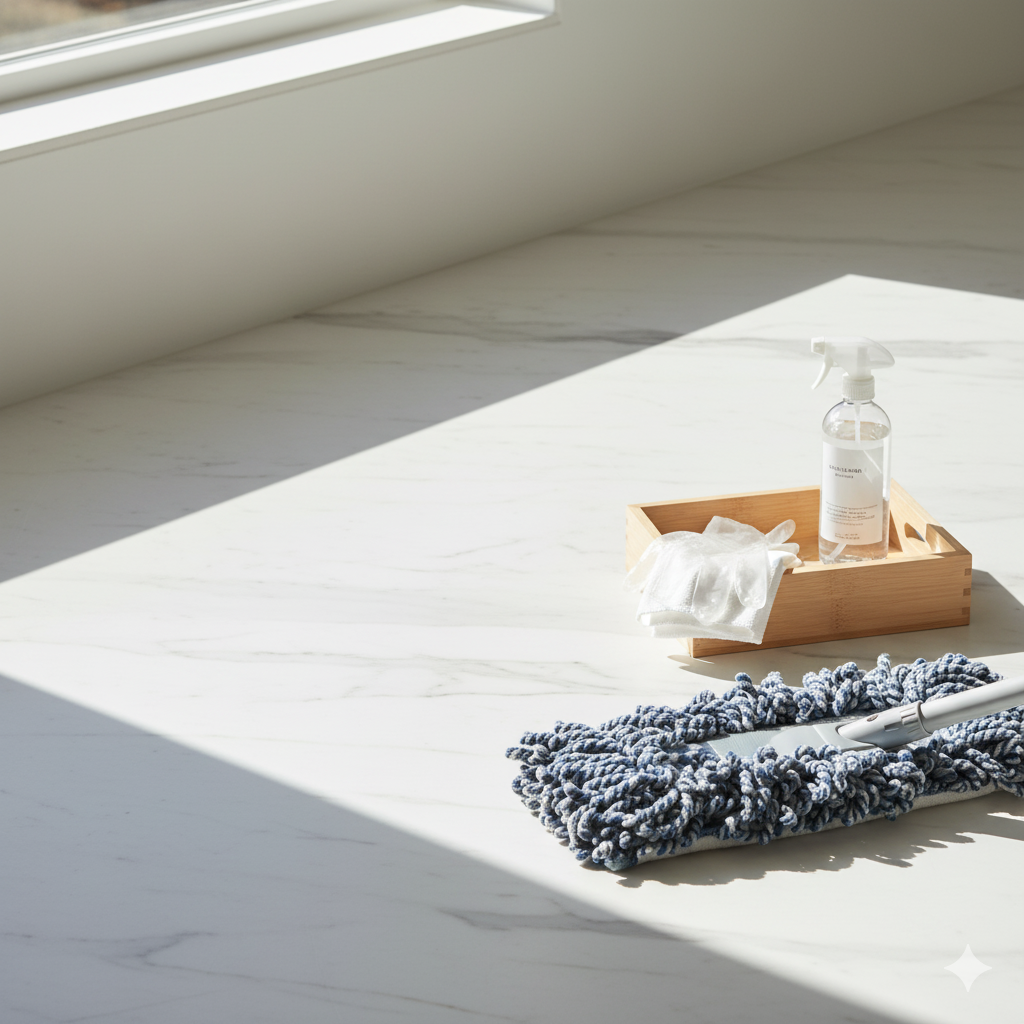
- Dry dust floors with a microfiber mop or vacuum using a soft floor head. This removes grit that causes micro scratches.
- Wipe counters and vanities with a soft cloth and a little pH-neutral cleaner diluted in water. Rinse the cloth and finish with a dry wipe so no residue remains.
- Handle fresh spills immediately. Blot first, then wipe. In kitchens keep a cloth within reach of the stove. On vanities keep a small towel near the tap.
Weekly and monthly care that preserves clarity
- Do a damp mop of floors with pH-neutral cleaner once or twice a week depending on traffic. Change water frequently so you are not spreading dirt.
- Clean skirting, ledges, and window sills with a soft cloth. Dust gathers there and migrates onto floors.
- Inspect high-use areas every month. If water is no longer beading up on counters or floors, plan to reseal soon.
- Move small furniture and vacuum under rugs to prevent trapped grit from marking the floor.
Sealing schedule and how to check if it is due
- Seal during installation. This sets the baseline.
- Check every six to twelve months. Frequency depends on use. Kitchens and entries usually need the shorter cycle. Bedrooms may go longer.
- Test with a spoon of water on a clean, dry patch. If the dark spot appears quickly and stays longer than a few minutes, the sealer is tired.
- Reseal only after a thorough clean and full dry. Follow the product’s dwell time and buff off excess so no haze remains.
Kitchen care plan for oil, turmeric, lemon, and heat
- Choose honed or leathered finishes for counters and islands. These finishes disguise micro etching better than a high polish.
- Keep trivets near cooktops and coasters under oil bottles. Brief heat contact is often fine, but trivets protect the finish and the sealer.
- For turmeric, masala oil, wine, coffee, and vinegar, blot immediately and wash with a neutral cleaner. Do not rub a fresh stain in circles. Lift, then clean.
- At day’s end, a quick two-cloth pass works best. One slightly damp with neutral cleaner, one dry to finish.
- Once a week, clean backsplash joints and underside ledges where splashes settle unnoticed.
Bathroom care plan for hard water and soap film
- Use a small squeegee or soft towel to dry walls and glass after showers. This prevents mineral spotting.
- For existing hard-water marks on marble, avoid acidic descalers. Instead, use a neutral stone cleaner and a soft nylon pad, then rinse and dry.
- Keep soaps and cosmetics on trays so residues do not sit on the stone.
- Ventilate well. Moving air prevents lingering dampness that can dull finishes over time.
After guests or festivals how to reset surfaces
- Start with a dry dust of all floors to remove grit tracked in by extra footfall.
- Do a methodical damp mop, changing water for each room.
- Inspect near the kitchen stove, dining edges, and mandir platform for drips of oil, ghee, or prasad and clean gently.
- If diya smoke has left a film, wipe with a neutral cleaner and warm water, then dry.
- Finish with a quick water-bead test on counters. If beading is weak, schedule resealing that week.
Stains, etching, and minor scratches what to do
- Organic stains such as turmeric or tea usually respond to repeated gentle cleans with neutral cleaner. For stubborn cases, ask a stone professional about a food-safe poultice for your specific stone.
- Oil stains respond to patience. Blot, then use a recommended stone poultice that pulls oil out over hours. Avoid solvents unless the product is designed for natural stone.
- Etch marks are dull spots from acids. On honed surfaces, light etches often improve with a careful hand rub using a stone-safe honing pad or professional kit. On polished walls or vanities, call a professional to re-hone and re-polish the patch invisibly.
- Fine scratches on floors usually vanish during professional maintenance polishing. Avoid DIY abrasives that can create uneven patches.
Do’s and don’ts everyone should follow
Do use pH-neutral cleaners, soft cloths, microfiber mops, and warm water.
Do use mats at entries, trivets near heat, and coasters under bottles.
Do test new products on an offcut if available, or on a hidden spot.
Don’t use vinegar, lemon, bleach, ammonia, hard descalers, or abrasive powders.
Don’t drag furniture. Lift and use felt pads.
Don’t leave wet buckets or plant pots directly on marble for long periods.
When to call a professional and what to expect
- Deep scratches, wide etch patterns, and stubborn stains that resist careful home methods deserve professional attention.
- A maintenance polish can restore clarity to tired floors without grinding the stone. Ask for a sample patch in a corner to approve the sheen level.
- Full restoration may include re-honing, re-polishing, and fresh sealing. Plan it during a light-use window and protect adjacent joinery with masking.
- Always confirm the finish level you want. Honed, soft polish, or high gloss each change how the room feels.
FAQs
- How often should I seal marble in a busy home?
Check every six to twelve months. Kitchens and entries usually need earlier attention. Bedrooms and guest baths can go longer. Always test with a few drops of water on a clean, dry spot. - What is the safest daily cleaner for marble?
A pH-neutral stone cleaner diluted in water and a soft cloth. For quick wipes, plain water followed by a dry cloth is fine if the surface is not oily. - Can I remove hard-water stains with vinegar?
Avoid vinegar on marble. Use a neutral cleaner and soft pad, or consult a professional for a stone-safe descaler made specifically for marble. - Do polished floors always feel slippery
Polishing reflects more light and can show micro wear faster. For family areas choose honed. Keep polished for walls and selected highlight zones. - My counter has a dull spot from lemon juice. Can I fix it myself?
On honed counters, light etching often improves with a stone-safe honing pad used gently. On polished counters, call a professional to re-hone and re-polish the patch so the sheen matches.
Conclusion
Marble stays beautiful when the routine is simple and consistent. Remove grit before it can scratch. Wipe spills when they are fresh. Clean with gentle, pH-neutral products. Seal on day one and check it on a realistic schedule. Give kitchens and bathrooms a few extra minutes of attention where oil, turmeric, and hard water meet the stone. When a mark slips through, respond calmly with the right method rather than a strong chemical. And when a surface looks tired after years of service, a professional maintenance polish can make it feel new again.
Follow these habits and your marble will keep its soft glow, your rooms will feel calm and premium every day, and the stone will reward you for decades with the quiet elegance that only a natural material can bring.
Leave a Reply